Homeschooling in Florida
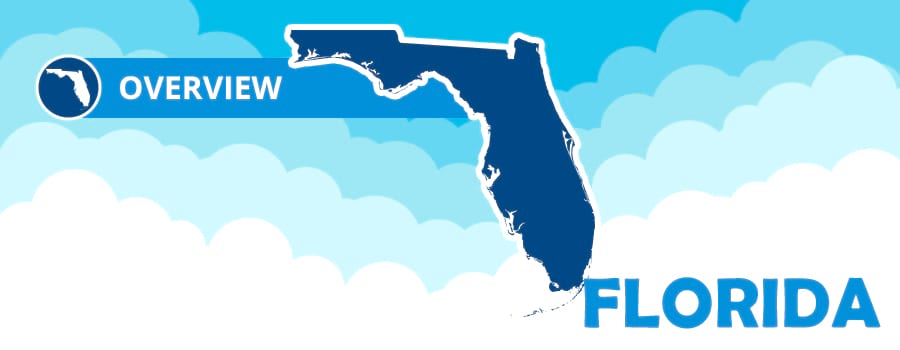
Are you thinking about starting to homeschool? Do you live in the state of Florida? Then you’ve landed at the right place to get a full overview of how to homeschool in Florida. Time4Learning understands that you have a lot of questions when you first begin the process of teaching your own child(ren). You’ll want to know things like “How does homeschooling work in Florida?” and “Can I start homeschooling in the middle of the school year?”
You may wonder what curriculum to use or whether your homeschooled child still has to take standardized tests. You’ll likely be curious about what support you’ll have access to once you get started. We want you to feel confident in your choice to start homeschooling in Florida. Below, you will find information that will guide you in the areas you are likely most eager to know about, including:
- How to Start Homeschooling In Florida
- Florida Homeschool Laws
- Florida Umbrella Schools
- Florida Homeschool Associations
- Florida Homeschool Groups and Co-ops
- Florida Special Needs Scholarship
- Florida Homeschool Field Trips
- Florida Homeschooling by City
- Florida Standards Assessment (FSA) Test Prep
- Why Time4Learning is the Leading Homeschool Curriculum in Florida
This information should by no means be interpreted as legal advice. It is your responsibility to interpret and understand the laws that you will be homeschooling under.
How to Start Homeschooling in Florida
According to Florida homeschooling authorities, families who establish a home education program should:
- File a notice of intent with the local superintendent’s office.
- Choose the curriculum. (In Florida, homeschool curriculum choice is up to the parent.)
- Maintain a portfolio of educational records and preserve them for two years.
- Provide annual student evaluations to the superintendent.
- File letter of termination and annual evaluation upon completion of homeschool program.
- Start enjoying homeschooling together!
Florida Homeschooling Laws
Homeschoolers in Florida have two basic options for teaching their children at home:
- Homeschooling under the homeschool statute
- Enrolling in an umbrella school
Find out more about each option in our Florida Homeschooling Laws page.
Florida Umbrella Schools
Although it technically is not considered homeschooling, there is another way to teach your child from home in Florida. That is to enroll your child in an umbrella, or cover school. By law, Florida allows parents to register their children as private school students with approved umbrella schools, while still educating them at home. Avoiding county oversight, reducing recordkeeping paperwork, and a private school diploma are a few of the reasons some families choose umbrella schools in Florida. Find out more: Florida Umbrella Schools

Florida Homeschool Associations
Almost every state has at least one statewide organization designed to support home educators, and Florida has a vibrant one. The goal of these organizations, usually run by local homeschool volunteers, is to support homeschoolers from the point that they choose to homeschool to the time when their child graduates or returns to the school system to complete their education. Visit our Florida Homeschool Associations page for more information on the state association and benefits of joining it.

Florida Homeschool Groups and Co-ops
You won’t be far into your homeschool research before you realize that you’re going to need some support to take on the challenge of teaching your child at home. Fortunately, Florida is a state with a large population of homeschool families, with plenty of support to go around! Then, you’ll want to discover what opportunities for networking are available in your area. You can start by browsing our Florida Homeschool Groups and Co-ops page. Read more here: Florida Homeschool Groups and Co-ops

Florida Special Needs Scholarship
If you have a child with special needs, he or she may be eligible for the Gardiner Scholarship. Florida students who are on the spectrum or who have specific disabilities such as muscular dystrophy, and Down syndrome, just to name a few, may be eligible to receive funding that can be used for therapists, specialists, and curriculum (including Time4Learning). Learn more about the Gardiner Scholarship including eligibility requirements and information on how to apply.
Florida Homeschool Field Trips
If you live in the Sunshine State, then you already know how many wonderful opportunities for family activities are at your doorstep. However, you may not have realized how many more chances you’ll have to take advantage of them as homeschoolers! One of the biggest perks of home education is the ability to turn almost any outing into a learning adventure. Our list of Homeschool Field Trips in Florida will break down some of the top educational destinations in each region of the state. Please make sure to contact each site before you plan your visit, as COVID-19 may have impacted their hours of operations.

Florida Homeschooling by City
Homeschooling in Florida has many outing destinations throughout the state. Check out these exciting opportunities for homeschoolers near these metropolitan areas of the sunshine state:

Florida State Test Prep
If you have a child in elementary, middle or high school, then you need to know about the standardized tests your child may be taking. Time4Learning can help your student improve on test scores. Learn more in our Florida test prep page.
Why Time4Learning is the Leading Homeschool Curriculum in Florida
Homeschoolers in Florida are required to maintain records and submit annual evaluations. When choosing your homeschool curriculum it is important to take into consideration if such curriculum helps you meet those requirements.
With the rise of homeschooling and ubiquity of technology in everyday life, homeschoolers in Florida and around the nation are choosing an online curriculum to homeschool their children.
Many families homeschooling in Florida rely on Time4Learning as their #1 educational choice, and more families join everyday. Here’s why:
- Our curriculum records all of your child’s online activities for you. All you need to do is print what they’ve done on a regular basis, every week or so, and store it in a folder or binder.
- Time4Learning’s parent tools make it easy to print out a student’s worksheets, compositions, and assessments as examples of progress made.
- Time4Learning’s self-paced, modularized lesson plans allow you to move forward and back through the materials whenever you want. You can skip lessons that teach concepts your child has already mastered and repeat those he or she has not. The choice is yours. With Time4Learning, you are always in control.
- All core subjects of math, science, social studies and language arts are included in our membership. Membership fee is among the most competitive in the industry. Other subjects are available depending on grade level.
- The world is your classroom, you can access all our lessons 24/7 from anywhere. All you need is internet connection and a laptop computer. This allows your students to learn while on the road.
Have a child with unique abilities? You may be eligible for the Gardiner Scholarship, a scholarship which allows parents to better meet the educational needs of their child. An administrator for this scholarship is StepUp for Students. Time4Learning is an approved programs for those eligible.