Building Vocabulary Skills

Building Vocabulary Skills - Games & Activities
The Reading Skills Pyramid(tm)

Building Vocabulary Skills


Vocabulary Building
"Time4Learning has new stuff every day"


Free Newsletter!

Last Name: First name:

E-mail Address: 

Menu

Time4Learning Home

Learn to Read
Reading Skills
PreReading Skills
Phonic
Comprehension Vocabulary
Fluency


Math Facts

PreK Math Curriculum and Standards

First Grade Math Curriculum and Standards

Second Grade Math Curriculum and Standards

Third Grade Math Curriculum and Standards

Fourth Grade Math Curriculum and Standards

Fifth Grade Math Curriculum and Standards

Sixth Grade Math Curriculum and Standards

Seventh Grade Math Curriculum and Standards

EighthGrade Math Curriculum and Standards

Site Map


Continuously updated curriculum

First lessons, then fun

Interactive online education

Prekindergarten through eighth grade curriculum


Building Vocabulary Words- Games & Activities


What are the best vocabulary builders? Do vocabulary games help? How important is building vocabulary words to mastering reading skills? What is the role of interactive and electronic media in building vocabulary words and skills?

To order a printed wall copy of the Reading Skills Pyramid, click here

Learn more about Language Arts, Math and more

The definitions from the Report of the National Reading Panel (2000):

Phonemic Awareness - the ability to hear and identify sounds in spoken words.
Phonics - the relationship between the letters of written language and the sounds of spoken language.
Fluency - the capacity to read text accurately and quickly.
Comprehension - the ability to understand and gain meaning from what has been read.
Vocabulary- the words students must know to communicate effectively.

The Significance of Building Vocabulary Words

Building vocabulary words is key to reading, to writing, to verbal expression, and in many ways, vocabulary is key to building analytical and critical thinking. A person's vocabulary skills can be measured in terms of building receptive vocabulary (ie understanding) words and their expressive vocabulary words. People can build their expressive vocabulary in two ways that can get measured: the written vocabulary words or their spoken vocabulary words. Building vocabulary skills improves reading comprehension and reading fluency. Without building a large vocabulary, students cannot read successfully.

Building Vocabulary & Learning Words Starts at Home

Building vocabulary is far more than memorizing words. Ideally, children should be brought up in a rich language environment which is language- and word- conscious. Children take up attitudes and learn from their parents so building vocabulary starts as a family affair. Children are greatly influenced generally by the amount of conversation, by the nature of the conversation (and the vocabulary used), and the "word awareness" of the family.There are a great number of families where vocabulary word games are played with the children as an ongoing game to build vocabulary and "word awareness" skills including phonemic awareness. These games can build vocabulary and phonemic awareness.

Vocabulary Games - The Fun way to Learn Words Starting Early

Two games to mention: The alphabet game. The first level starts as early as age 3 with just reciting the alphabet going back and forth between parent and child (this often is done while driving). Once this "level" of the word game gets too easy, its time to play the game with words and go back forth with: "Apple, Baker, Cat etc". You might play the game twice in succession and in the second round, you must use new words which makes it a tougher vocabulary game. At the next level, we restrict the word to just one type such as foods: "Apple, Banana, Cheese, etc". The next level of this word game might require two syllable animal words. (BTW - we usually do not keep score and stop at V). Another vocabulary / word skill game: Hig Pig (a favorite word game), a question is asked with a definition: the answer has to be two words that rhyme. For instance: "What do you call a canine that has badly over-eaten?" Answer. a "Hog Dog". And a feline? Answer: a "Fat Cat". From there, you can move to Higgy Piggies where the answers are two syllables long. Ex, "What do you call a crab-like creature involved in organized crime?". Write to higpig@time4learning.com for the answer to this vocabulary game.

Techniques for Building Vocabulary Words - Reading & Other Media

The best method for building vocabulary is to be an active reader. But, there are differences between skilled active readers and less skilled passive ones (see reading comprehension) Students should learn to decode vocabulary words thru a vocabulary building techniques such as context clues and word roots. Word roorts means that students should learn to define words by learning the meanings of root words, prefixes and suffixes. Knowing the basics of the Latin and Greek word roots in English is useful and helps students get insight into how the English language vocabulary words derived and are structured. The use of media greatly affects the building of vocabulary. Some television programs use a large and rich vcoabulary, others are mostly explosions. Whereas many contemporary and classcial films (especially the musicals) had great conversations and rich vocabulary, many others are noticable for their poor quality of conversation (the Power Ranger might stand out as having the most limited vocabulary. Whole episodes consist of a dialogue such as "Lets do it" and "Watch out!", not exactly a sound track to build vocabulary. In interactive media, there are games where the entire sound track is explosions, there are interactive systems with rich vocabulary building, such as Time4Learning....

Time4Learning's Approach to Building Vocabulary Words

Time4Learning helps students review commonly misused words and phrases.. There are vocabulary games to build vocabulary word skills through synonyms, antonyms and homonyms. There are strategies, skills, and individual word instruction that students needed to build vocabulary proficiency.

For more information on how the reading skills are developed, look at the Time4Learning Reading Skills Pyramid.

From preschool to 4th grade, Time4Learning uses vocabulary games, activities and fun interactive vocabulary lessons as vocubulary builders. Learn more about Time4Learning's comprehensive reading and vocabulary curriculum.

Build Vocabulary Skills - One Section in the Reading Skills Pyramid

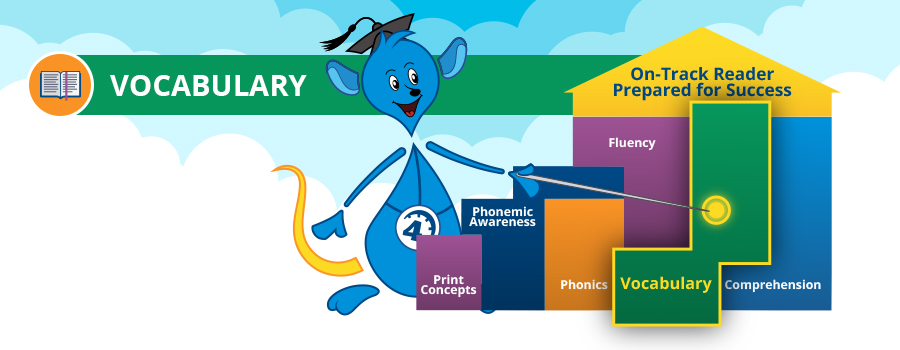
The Reading Skills Pyramid illustrates that there are many steps to becoming a proficient reader. Generally, the skills can be split into two halves: one half is word decoding which is made up of phonemic awareness, phonics,. The other half is made up of a set of skills that falls into three categories: comprehension, vocabulary, and fluency. .


Is your child being homeschooled?


Subjects Time4Learning Administration
How Time4Learning Helps Contact Us
Build a Math Foundation About Time4Learning Homeschool Online
Reading Skills Pyramid Sample Lessons CompassLearning Odyssey
Early Education Success Site Map Learn to Read Online
Learning and Learning Games - The right balance Learning Games Demos The Playground - First Learn, Then Play
Second Grade Math Math Facts


Quick Tips

Where to begin?
Read about how Time4Learning helps children, ages 3-14, to learn language arts and math.

Want to know more?
Take the Tour and try the sample lessons with your children

Not sure you should?
Subscribe to the Time4Learning Email Newsletter for help with your doubts.

Free Newsletter!

Last Name: First name:

E-mail Address: 


Want outside opinions?
Ask parents about Time4Learning in your choice of online educational support groups or forums.
Specific questions?
Email us to talk about your curriculum questions.

What's the risk in trying?
There is no risk with the Time4Learning 14 day money-back offer.